Has Your Recovery Stalled? TECAR Therapy Could Help
July 2026
Standard physiotherapy – the exercises, the manual therapy, the stretching protocols – works best when the underlying tissue is ready to respond. The problem is that in many musculoskeletal conditions, and especially with post-surgical joints and frozen shoulder, the tissue is locked in a state where it simply cannot respond the way the textbook assumes.
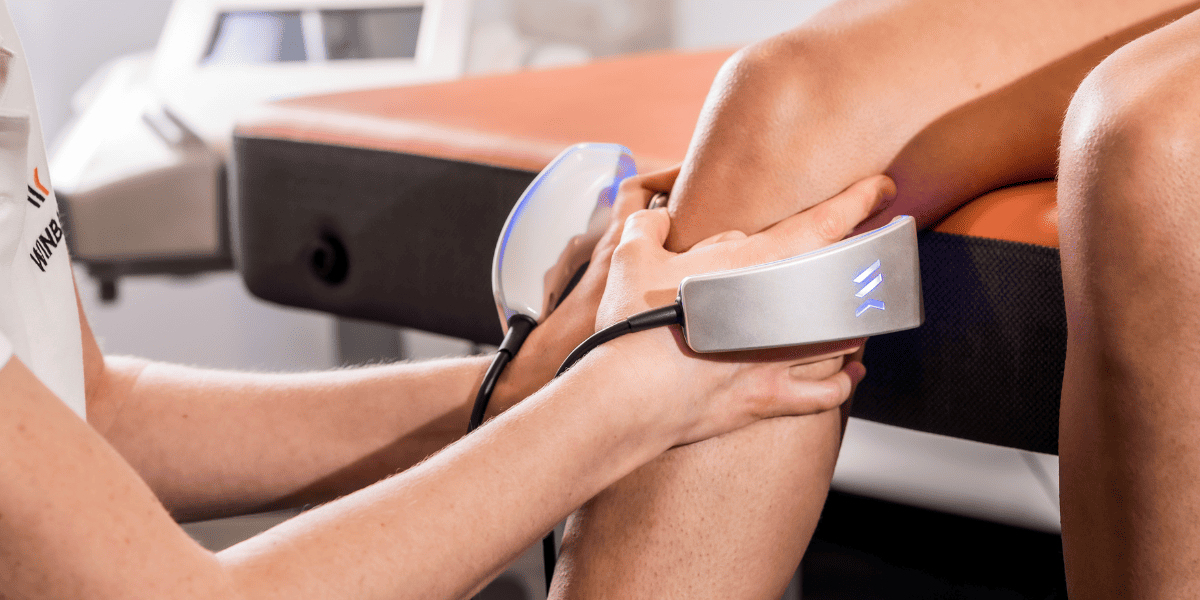
TECAR excels at supporting soft-tissue recovery
After a knee or hip replacement, the body has been through significant surgical trauma. The surrounding tissue is inflamed, circulation is compromised, and the cellular environment for repair is outright hostile. Asking that tissue to work harder through aggressive exercises is like asking someone to drive fast on a flat tyre.
With frozen shoulder, the problem is fibrotic capsular tissue that has thickened and contracted. Stretching it without first changing the thermal and circulatory environment inside that tissue is often painful, slow, and frequently ineffective in the earlier stages of rehab.
The insight that changed our approach was this: tissue needs the right biological conditions before it can meaningfully respond to rehabilitation. Not instead of rehabilitation. Before it, alongside it. In a way that makes each physiotherapy session land differently, absorb better, and produce results that actually hold up.
That's the gap that TECAR radiofrequency-based therapy fills. Not as a magic fix. Not as a replacement for the hard work of recovery. As the missing step that creates the conditions in which recovery becomes genuinely possible, faster and more durable than anything we achieved before we had access to this new technology.
We've seen patients who had plateaued for weeks after knee replacement surgery begin making measurable range-of-motion gains within a handful of sessions. We've seen frozen shoulders that had resisted months of conventional treatment start releasing once tissue temperature and circulation were addressed at the right depth.
Common problems we treat with TECAR
If one of these sounds like your situation, our guides go into more detail:
Why does my knee or hip still hurt after a "successful" replacement? – on persistent pain even when the surgery went well, and where TECAR can help.
Do you really have to wait out a frozen shoulder? – why "just be patient" isn't the whole story, and how to ease the painful phase.
Still limping or feeling weak after a hip replacement? – the muscle weakness that can linger once the joint is fixed, and how to work on it.
Our TECAR therapy uses the very latest technology
At Atkins Physio, we deliver TECAR therapy using the Winback BACK4, one of the most respected radio-frequency therapy devices available in clinical practice today.
TECAR stands for Transfer of Energy Capacitive and Resistive. The technology uses controlled radio-frequency energy to generate deep, targeted heat within the body's own tissues. This is not surface heat, like the kind you get from a heat pack. It’s deep thermal activity inside the muscle, joint capsule, fascia, and surrounding structures, right where the problem actually lives.
In capacitive mode, the TECAR energy targets soft tissue, muscle, and fluid-rich structures, driving circulation, reducing swelling, and improving the cellular environment for repair. In resistive mode, it reaches deeper into denser tissue, bone-adjacent structures, joint capsules, and ligaments, the kind of tissue that standard treatments simply don't reach effectively.
What this means in practice: the tissue becomes genuinely more responsive. Circulation improves. Inflammation modulates. The cellular conditions for repair are actively created rather than passively waited/hoped for. When physiotherapy exercises follow, the tissue is ready for them in a way that it just wasn't before.
We use the Winback BACK4 specifically because it gives us precise, real-time control over energy delivery, treatment depth, and tissue response. This isn't a passive treatment where you lie under a machine and wonder what's happening. It's an active, targeted clinical intervention guided by a trained physiotherapist who understands your anatomy, your history, and your recovery goals.
TECAR Therapy is non-invasive. The radio-frequency used is controlled, well-researched, and applied by a qualified physiotherapist throughout every session. It's safe, it's specific, and it fits into a structured rehabilitation plan.
What happens in a TECAR therapy session at Atkins Physio
Deep tissue heating
Before you can move a stiff post-surgical knee, before you can stretch a frozen shoulder that's been locked for months, the tissue needs to be ready. A heat pack reaches a few millimetres deep. TECAR reaches the structures that actually matter.
Using both capacitive and resistive modes, the Winback BACK4 delivers radio-frequency energy into muscle, joint capsule, fascia, and periarticular tissue at the depth where your problem originates. You’ll feel a deep, warming sensation, often described as the most immediate relief patients have experienced from any treatment they've tried.
The result is a tissue environment that's more conducive to recovery by the time your physiotherapy exercises begin. Warmer, better-perfused, more elastic, and more responsive.
Improved circulation and reduced swelling post-surgery
One of the biggest obstacles in post-operative rehabilitation is persistent swelling that limits movement, increases pain, and slows everything down. It's not just uncomfortable; it's a mechanical barrier to recovery.
TECAR therapy's capacitive mode stimulates local circulation in a way that helps the lymphatic and vascular systems do their job more effectively. Swelling begins to reduce. The joint has more room to move. The tissue stops feeling like it's wrapped too tight.
For patients after knee or hip replacements, this can translate into measurable improvements in range of motion within a relatively short treatment window – progress that often surprises people who had resigned themselves to a long, slow grind.
Capsular release for frozen shoulder without aggressive stretching
Frozen shoulder is one of the most frustrating conditions in musculoskeletal practice, for patients and physios alike. Aggressive manual stretching into resistance is painful, often counterproductive in the early stages, and notoriously slow.
TECAR therapy changes the approach entirely. By applying resistive-mode radiofrequency to the shoulder capsule and surrounding soft tissue, we create the thermal and circulatory conditions that allow fibrotic tissue to begin releasing without the level of force that makes conventional treatment so difficult to tolerate.
Patients with frozen shoulder typically notice improved passive range of motion earlier in the treatment course than they experienced with previous therapy. And critically, the improvements tend to hold between sessions rather than reverting.
Faster rehabilitation with less pain during exercise
Doing physiotherapy exercises when tissue is still inflamed, restricted, and poorly perfused makes them painful enough that most people either avoid doing them or don't complete their full range.
When TECAR therapy precedes your exercise rehabilitation, the tissue you're working with is in a fundamentally different state. Movement is less threatening. Range is more accessible. You can complete the exercises properly, and completing them properly is what produces the outcomes the exercises were designed for in the first place.
Across post-surgical rehabilitation and frozen shoulder treatment, combining TECAR therapy with structured physiotherapy has produced measurably faster functional improvement than conventional physiotherapy alone. Less time in the clinic. Less time in pain. More time doing what you actually want to do.
Treatment guided by a qualified physiotherapist, every session
The Winback BACK4 is a powerful clinical tool. Every session at Atkins Physio is conducted by a qualified physiotherapist who will assess your tissue response, adjust the treatment parameters in real time, and integrate TECAR therapy within a coherent, personalised rehabilitation plan.
Your clinician is present throughout, reading your tissue response, adapting the approach, and connecting what happens in each session to your broader recovery goals. This clinical oversight is what makes the difference between a pleasant warm feeling and a genuine therapeutic outcome. It's also what gives you the confidence that what you're receiving is appropriate for your specific condition, your surgical history, and where you are in your recovery.