Frozen Shoulder: Do You Really Have to Just Wait it Out?
July 2026
If you’ve been told you have a frozen shoulder, you have probably also been told to be patient, or that it will sort itself out eventually. It is one of the most common pieces of advice given for the condition, and it is not entirely wrong.
But for anyone lying awake at 3am because they rolled onto the wrong side, "just wait it out" can feel less like reassurance and more like a sentence. The good news is that it is not the whole story.
What frozen shoulder actually does over time
Frozen shoulder, or adhesive capsulitis, tends to move through three overlapping phases, and understanding them explains a lot about why it feels the way it does.
- The freezing phase. This is the painful one. The shoulder becomes increasingly sore, often worse at night, and gradually starts to stiffen. It typically lasts somewhere between two and nine months.
- The frozen phase. The sharp pain begins to ease, but stiffness takes over. The shoulder feels locked, and everyday movements like reaching for a seatbelt or fastening a bra become genuinely difficult. This stage can run from around four months to a year.
- The thawing phase. Movement slowly returns. This is the recovery stretch, and it can take anywhere from five months to two years.
Add up those timeframes and you can see why frozen shoulder has a reputation for outstaying its welcome. It most often affects people between 40 and 60, is more common in women, and is more likely, and often more stubborn, in people with diabetes or thyroid conditions.
The "self-limiting" label is only half true
For a long time, frozen shoulder was described as “self-limiting”: leave it alone and it resolves within a year or two. More recent evidence, however, has softened that confidence considerably. A significant proportion of people – by some estimates around 40% – still report symptoms years after onset, and a smaller group are left with lasting stiffness or pain that never fully settles.
In other words, "it usually gets better on its own" is not the same as "there is nothing worth doing". Waiting passively can mean months of avoidable pain and a shoulder that recovers less fully than it might have. That’s a lot to sit through when the condition can last the better part of two or three years.
Why timing matters, and why aggressive stretching can backfire
Here is the part that catches a lot of people out with frozen shoulder. The instinct with a stiff shoulder is to stretch it hard and force the movement back. During the painful freezing phase, this often makes things worse, flaring the inflammation and prolonging the misery.
Good treatment is therefore phase-appropriate. Early on, the priority is calming pain and inflammation and keeping the shoulder moving gently within comfortable limits. Later, as the pain settles, more active work to restore range and strength becomes the focus. By matching the treatment to the phase, we tend to see a smoother, quicker recovery.
Where TECAR therapy fits in
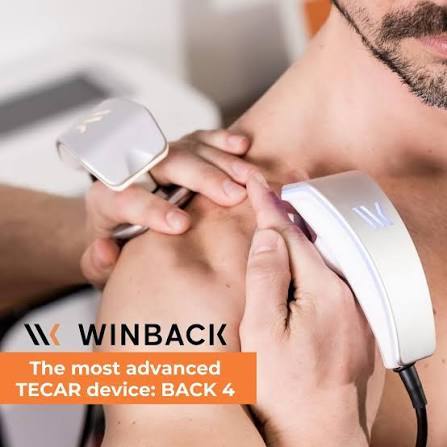
This is exactly the treatment gap that TECAR therapy is well suited to fill. As covered in more detail on our page on TECAR therapy and soft-tissue recovery, it is a non-invasive, drug-free treatment that delivers gentle, deep warmth into the shoulder using radio-frequency energy.
For a frozen shoulder, the warmth does something useful at every stage. In the painful freezing phase, it helps ease pain and settle the irritated tissue without the aggravation that forced stretching can cause, which can make a real difference to sleep and daily comfort.
As you move into the frozen and thawing phases, improved circulation and reduced pain make the hands-on treatment and mobility work involved far more tolerable and productive, meaning you can actually get on with the movement your shoulder needs to recover.
TECAR is not a magic switch that unfreezes a shoulder overnight, and we would never pretend otherwise. Its value is as a supportive part of a proper, staged rehabilitation plan: by calming the shoulder down, it opens a window in which the rest of the treatment can work. Research looking at TECAR added to exercise for stiff, painful shoulders has reported worthwhile improvements in pain and function, which fits what we see in practice.
You do not have to simply endure it
For most people, frozen shoulder will improve with time. But time is not the only thing that helps, and there is a strong case for not just gritting your teeth through it for two years. Easing the pain sooner, protecting your sleep, and guiding the shoulder through its phases can make the whole experience shorter, more bearable, and more complete in the long run.
If your shoulder is stiff, painful and holding you back, book an appointment or get in touch. We can assess which phase you are in and talk through whether TECAR therapy has a part to play in getting things moving again.
Related reading
How TECAR therapy works – a fuller explanation of the treatment and the range of problems it can help with.
This article is for general information and is not a substitute for individual clinical assessment. Frozen shoulder can resemble other shoulder conditions, so a proper diagnosis matters, and suitability for TECAR therapy is decided on a case-by-case basis following assessment.