
Discover AposHealth: A New Option for Joint Pain Relief
January 2026
Understanding AposHealth: A personalised orthopaedic solution
AposHealth is a non-invasive medical treatment that uses a foot-worn device to help manage chronic knee, hip, and lower back pain. It fits well alongside traditional physiotherapy, and it is designed for people who want to avoid or delay surgery and reduce reliance on pain medication.
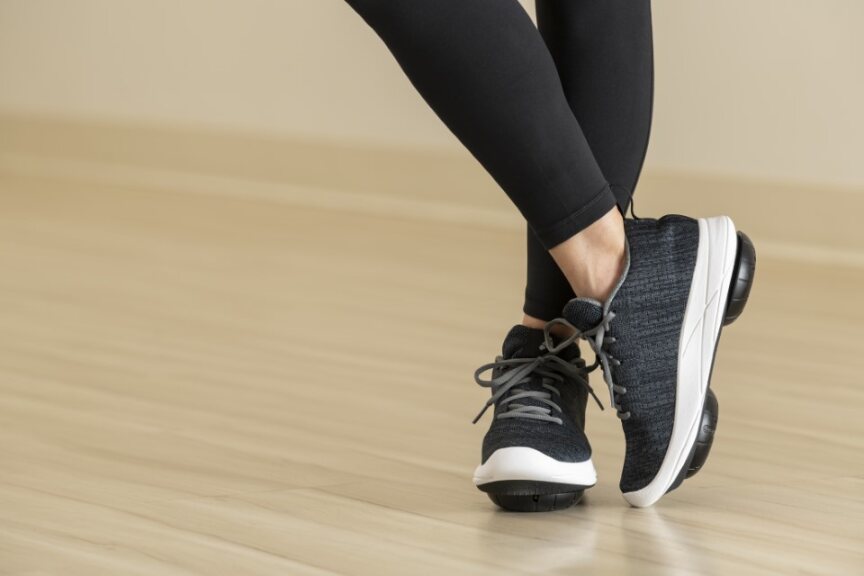
The Apos approach is based on precision medicine. In simple terms, your treatment is tailored to the way your body moves. An AposHealth trained clinician assesses your anatomy, your walking pattern (biomechanics), and how your muscles and nervous system respond to movement, known as neuromuscular control. Using this information, they fine-tune the device so it subtly adjusts how forces travel through your joints when you walk.
The device looks like a pair of trainers with adjustable pods on the soles. These calibrated pods slightly shift your centre of pressure and change how your joints load with each step. The aim is twofold. First, to reduce painful stress on irritated structures. Second, to retrain muscles and movement patterns over time so your joints are better supported in daily life.
You typically wear the device for short, planned periods during normal activities at home or outdoors. It becomes part of your daily routine, not an extra clinic visit, and can sit alongside your existing physiotherapy programme when clinically appropriate.
How AposHealth therapy works day-to-day
AposHealth therapy follows a clear, structured process that fits around your normal life. It is non-invasive, drug-free and designed to feel straightforward from the first appointment.
Step 1: Detailed movement assessment
Your journey starts with an AposHealth trained clinician, who is also a physiotherapist. They take a full history of your knee, hip or back symptoms, then assess how you stand, walk and turn. This combines observation with instrumented gait analysis when available. The aim is to understand how your joints load and which movement patterns may be driving pain.
Step 2: Custom calibration of the device
You then try the AposHealth footwear with its adjustable pods. The clinician makes small, precise changes to pod position and height. After each change they recheck your walking pattern and pain response. This step-by-step calibration is based on published biomechanical and neuromuscular research and is tailored to your specific presentation.
Step 3: Daily use and muscle retraining
Most people start by wearing the device for around an hour a day during everyday activities at home or outdoors. You can build up time as advised. The calibrated pods gently shift loading away from painful areas and encourage more balanced muscle activity. Over time this helps retrain walking patterns, support better joint alignment and promote longer term stability. Your clinician reviews progress at follow up visits and adjusts the set up as your movement improves.
Benefits of AposHealth for physiotherapy clients
AposHealth is designed to support your joints in a targeted, measurable way, so you can move with more confidence in everyday life.
Key benefits you can expect when clinically appropriate:
- Reduced pain and stiffness. By changing how forces pass through your knee, hip or lower back when you walk, the device can ease pressure on irritated tissues. This often means less pain during walking, stairs and daily tasks.
- Improved mobility and function. As your movement patterns retrain, you may find it easier to stand for longer, walk further and return to activities that pain has limited.
- Support to avoid or delay surgery. For some people who are suitable for AposHealth, conservative care that includes this therapy can help manage symptoms so surgery is not the immediate next step.
- No medication-related side effects. AposHealth is drug free. It works through biomechanics and neuromuscular training, not tablets or injections.
- Works alongside physiotherapy. You can usually continue your existing physiotherapy exercises. The device complements strengthening and mobility work by reinforcing healthier movement patterns during your normal day.
The AposHealth approach is supported by published clinical and biomechanical research that has evaluated pain, function and gait. Your AposHealth clinician will explain how this evidence relates to your specific condition and goals.
Accessing AposHealth in the UK: Affordability, Insurance, and Support
When you are living with persistent knee, hip or lower back pain, the practical side of starting AposHealth matters just as much as the clinical detail. You should know exactly how to access care, what it may cost, and how follow-up support works.
Insurance coverage
AposHealth can be provided within UK private healthcare pathways. Coverage varies by insurer and policy, so it is important to check your own terms for wording related to conservative treatment for musculoskeletal or orthopaedic conditions. In some areas it may also be available through locally commissioned services. Your AposHealth clinician can advise what applies in your area.
Getting started and follow-up support
The first step is a clinical assessment and gait analysis with an AposHealth trained physiotherapist, which you can arrange through our AposHealth information page or by using our online booking.
If you are suitable, you receive a personalised device and a clear daily wear plan.
Follow-up reviews are scheduled at set intervals to check pain, function and walking pattern. Your clinician adjusts the device as your movement changes and remains available between visits for advice, so you are not left managing things alone at home.
Frequently asked questions about AposHealth shoes and therapy
What are AposHealth shoes?
AposHealth shoes are a prescribed medical device. They look like trainers, but have adjustable pods on the soles. Your clinician calibrates these pods to change how forces travel through your joints and to retrain your walking pattern.
How are they different from regular orthopaedic footwear?
Standard orthopaedic shoes or insoles usually give static support and cushioning. AposHealth footwear is designed for active biomechanical and neuromuscular training. The pod positions can be changed over time as your symptoms and gait improve.
Do I have to walk the whole time I wear them?
No. Your plan usually involves light daily activities at home or outdoors. Short rests are fine. Your clinician will give clear guidance on how long to wear the device and how quickly to build up.
How long does treatment usually last?
Treatment length varies. Minimally AposTherapy is a 12-month programme. Thereafter, it depends on individual patient needs. For some, that is all that is required; others extend their AposTherapy for longer-term protection and maintenance.
How long does treatment usually last?
Some patients experience pain reduction quite quickly, within a few weeks. But most commonly significant improvements are noticed after 2-3 months. We always say that AposTherapy should be viewed as a medium-to-long term solution.