IDD Therapy Explained for Chronic Back and Neck Pain
February 2026
Understanding IDD Therapy for Back and Neck Pain
IDD Therapy, short for Intervertebral Differential Dynamics Therapy, is a targeted spinal treatment that aims to reduce chronic back and neck pain linked to discs and joints in the spine. In simple terms, it is a form of precise mechanical decompression. You lie on a specialist treatment table, are comfortably strapped in, and a computer controls gentle, measured pulling forces through the spine.
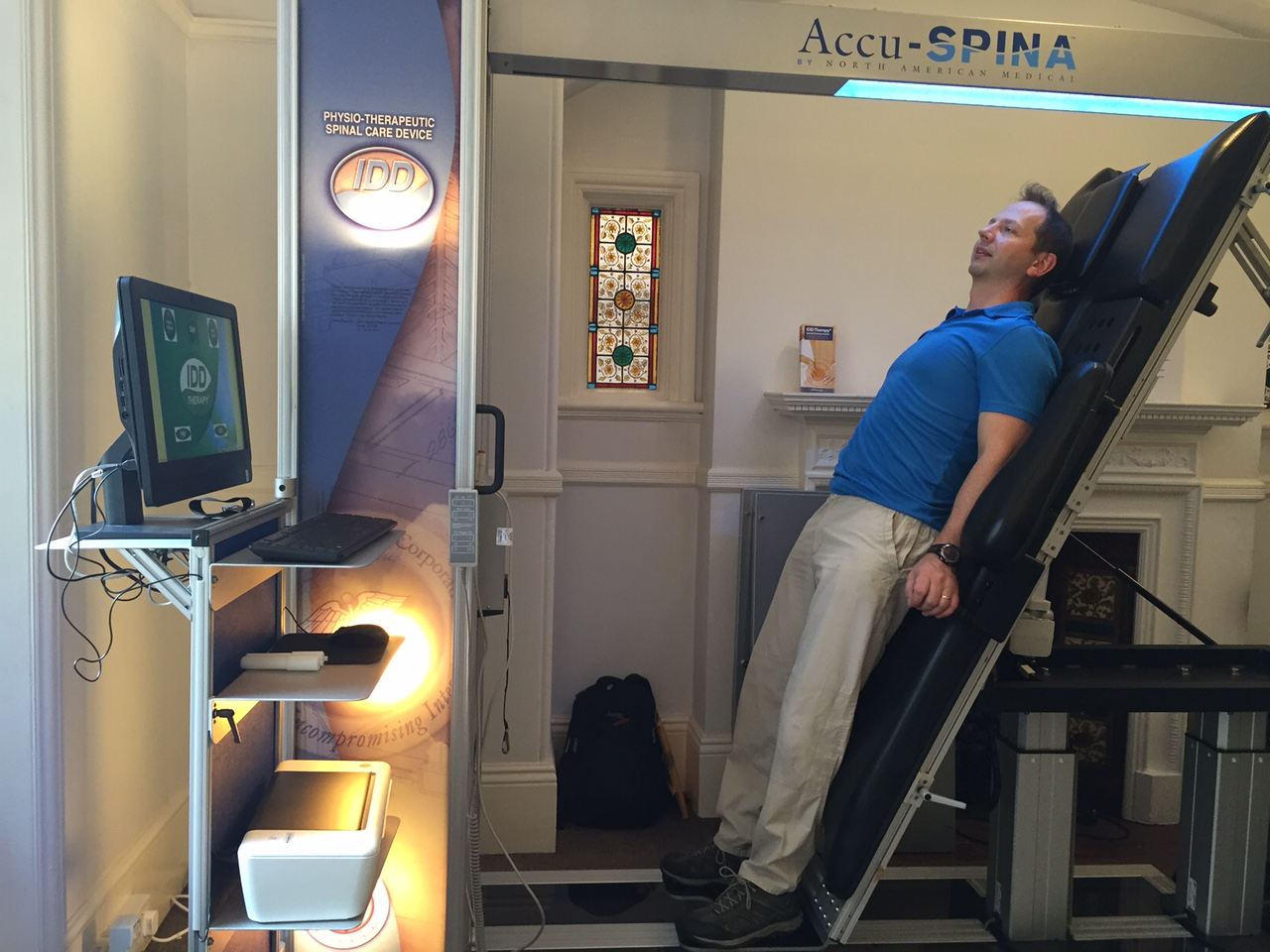
These forces aim to create a small, controlled separation between the vertebrae. This can help reduce pressure within the disc, ease irritation around spinal nerves and improve movement in stiff segments. By improving the mechanical environment of the disc and surrounding tissues, IDD Therapy supports the body’s natural healing processes over a structured programme of sessions.
Crucially, IDD Therapy is classed as a non-invasive treatment in the UK because it does not involve surgery, injections or medication delivered through needles. You stay fully clothed, and treatment takes place in a familiar clinic setting, often alongside physiotherapy, exercise and education.
Clinicians across the UK use IDD Therapy as part of evidence-based care for persistent spinal pain, particularly when symptoms have not settled with standard hands on treatment and exercise alone. At our clinic, it sits within a wider physiotherapy service that includes manual therapy, exercise rehabilitation and other modalities such as Shockwave Therapy when appropriate.
Who Can Benefit from IDD Therapy?
IDD Therapy is designed for people with persistent back or neck pain where the source of symptoms is thought to be the spinal discs or small joints, rather than a recent acute injury. In UK clinical practice it is often considered when symptoms have lasted for a longer period and have not improved enough with standard physiotherapy, exercise and medication.
Conditions that may be suitable for IDD Therapy include:
- Disc-related lower back pain with or without referred leg pain (sciatica-type symptoms)
- Cervical disc problems with arm pain or nerve irritation
- Disc bulges or contained herniations confirmed on imaging, where a conservative approach is advised
- Degenerative disc disease with ongoing stiffness and activity related pain
- Facet joint related pain where segmental decompression is clinically appropriate
Good IDD Therapy candidates usually have stable symptoms, no signs of serious spinal pathology and a medical background that allows them to tolerate gentle mechanical loading. Your physiotherapist will screen for red flags, review any scans and examine your movement and nerve function before recommending IDD Therapy as part of a broader physiotherapy plan. If your pain pattern is more muscular or linked to posture, a targeted physiotherapy programme or disc and sciatica rehabilitation pathway may be more appropriate.
What to Expect During and After IDD Therapy
An IDD Therapy session usually starts with you lying comfortably on the treatment table, fully clothed. Your physiotherapist positions padded harnesses around the pelvis and chest, then sets the treatment programme on the computer according to your assessment findings and UK clinical guidelines.
A typical IDD Therapy session
- Positioning and set-up
- Controlled spinal decompression for a set period
- Rest period and gentle movement off the table
Most sessions last around 45 minutes including set-up and getting off the table. During treatment you should feel a gentle pulling or stretching sensation through the spine, sometimes with a feeling of pressure change around the disc area. You should not feel sharp, severe or worsening pain. If you do, your therapist will adjust or stop the session.
After treatment
It is common to feel looser, or occasionally a little achey, similar to how you might feel after focused manual therapy. Your physiotherapist may advise short walks, simple exercises or activity pacing to support the mechanical changes created in the spine.
Expected outcomes over a structured programme include gradual pain reduction, easier movement and improved function in daily tasks, often as part of a wider physiotherapy plan.
Safety and Accessibility of IDD Therapy in the UK
In UK practice, IDD Therapy has a strong safety profile when delivered by trained clinicians who follow recognised physiotherapy and medical guidelines. Treatment uses controlled mechanical forces and computer programming, which allows your therapist to set, monitor and modify the load according to your presentation and response.
Common contraindications include:
- Serious spinal pathology or recent spinal surgery
- Known spinal instability or fracture
- Severe osteoporosis or conditions affecting bone strength
- Active infection, inflammatory arthritis or suspected malignancy
- Pregnancy, uncontrolled cardiovascular or significant neurological disease
At Atkins Physio, your clinician will complete a full assessment, review relevant imaging and medical history, and obtain informed consent before starting IDD Therapy. Treatment parameters are adjusted over time in line with UK clinical reasoning frameworks and your feedback.
At our clinic, IDD Therapy sits within an integrated spinal pathway, and you can read more about our approach on our IDD Therapy information page or contact our physiotherapy team for guidance.
Next Steps and Key Considerations Before Starting IDD Therapy
1. Speak to a qualified clinician
Book a review with a physiotherapist or spinal specialist who understands IDD Therapy and current UK guidance on persistent spinal pain. Bring past MRI scan reports, medication lists and a clear description of your symptoms. The aim is to confirm that your pain fits a disc or joint pattern and to rule out conditions that need a different pathway.
2. Set realistic expectations
IDD Therapy is usually part of a structured programme, not a single quick fix. Your clinician will explain the proposed number of sessions, how your progress will be monitored, and what counts as a meaningful improvement for you, for example walking further, sitting more comfortably or sleeping better.
3. Fit IDD Therapy into a wider plan
In UK practice, IDD Therapy works best alongside active rehabilitation. This typically includes individualised exercises, activity pacing and advice about work, hobbies and daily tasks. You’ll agree a clear plan with your physiotherapist that covers both IDD sessions and at-home strategies.
If you are unsure whether IDD Therapy is appropriate, you can contact our team through our clinic contact page or arrange a consultation via our online booking system to discuss your options in detail.